6 Best AI SOC Automation Tools for 2026
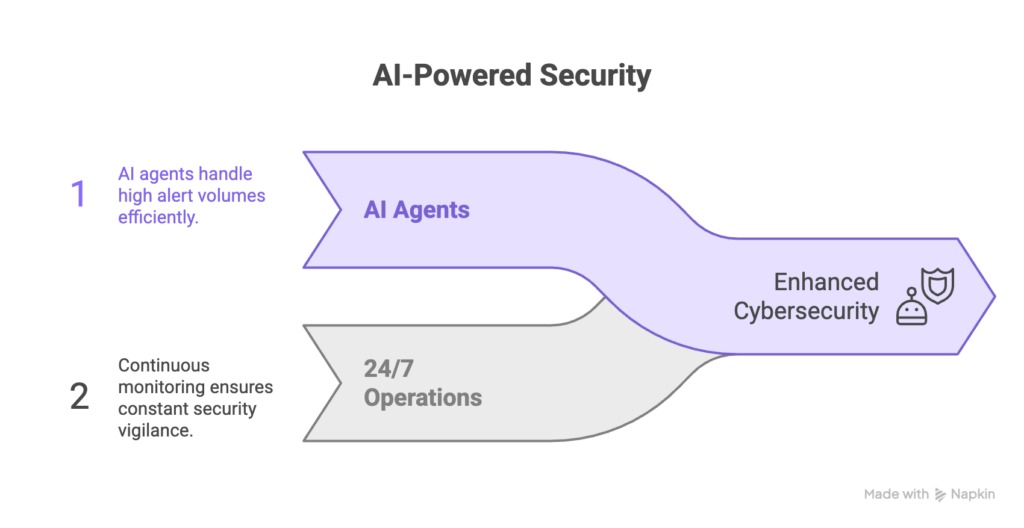
Security operations centers (SOCs) are drowning in alerts gloabally. Auto generated threats and alert fatigue are leaving cybersecurity teams overwhelmed. To solve this, we are now seeing AI-powered SOC platforms that automate routine triage and investigation tasks, boosting speed and accuracy.
To write this detailed guide on Best AI SOC Automation tools, we compared 15+ AI SOC Tools and narrowed down to 6 best AI SOC automation tools, highlighting each platform’s background, core features, strengths, limitations, and ideal use cases.
We focus on functionality, integration, innovation, scalability, and real-world SOC workflows to give CISOs and security leaders the insights they need to choose the right solution.
Table of Contents
How do these AI SOC tools handle data privacy and compliance?
How easily do AI SOC platforms integrate with our existing tools?
How do SOC Automation platforms scale for small vs. large SOC Teams?
How do AI SOC Automation platforms address false positives and trust?
What if organisations have existing SOAR or SIEM investments?

1. Hunto AI (Tier‑1 Autonomous SOC Analyst)
Hunto AI offers an AI security automation platform featuring its SOC Analyst Agent, an AI-powered Tier-1 analyst that automates alert triage and investigation. It is designed to integrate with an existing SIEM and EDR stack, using a combination of LLMs and deterministic logic to replicate human analyst reasoning.
Key Features: Autonomous Triage, Evidence-Backed Reasoning, Continuous Feedback Loop, Customizable Agents
Best For: Lean security teams, MSSPs, and mid-market companies looking to automate Tier-1 and Tier-2 analysis.
Pricing Model: Per protected asset (e.g., endpoint, user, or cloud resource).
Replaces SOAR?: Yes, for Tier-1/2 investigation and triage workflows. It can also integrate with existing SOAR for complex response actions.
How does Hunto AI perform autonomous investigation?
The Hunto AI agent operates as an autonomous layer over a company’s security tools. Upon ingesting an alert from a SIEM or EDR, it immediately begins a multi-step investigation without human intervention. The agent applies threat hunting techniques, correlates log data, and seeks evidence to either confirm a threat or dismiss it as a false positive.
A core feature is its evidence-backed reasoning. The agent provides a complete audit trail for every decision, citing the specific data points from logs, threat intelligence feeds, and internal knowledge bases. This transparency allows human analysts to quickly verify the AI’s conclusions and build trust in the system. Hunto claims its platform can reduce analyst workload by over 80% across SIEM, EDR, and cloud alerts.
How Hunto AI Solves Analyst Fatigue
Hunto directly addresses analyst fatigue by taking over the repetitive, high-volume work of initial alert investigation. Consider a typical phishing alert from Microsoft Defender.
Ingestion: The agent ingests the alert, automatically parsing observables like the sender’s IP, domain, URL, and attachment hash.
Enrichment: It queries multiple threat intelligence sources like VirusTotal and AbuseIPDB for reputation data on the observables. The URL is detonated in a sandbox environment.
Correlation: The agent then queries the SIEM to determine if other users received the same email or if anyone clicked the suspicious link.
Decision & Action: If the email is confirmed malicious, the agent escalates a high-priority incident to a human analyst with a full investigation report. If it’s a known-benign sender, the agent closes the alert and documents the evidence, freeing the analyst entirely.

Limitations: Hunto’s agentic model requires a 2-4 week deployment and tuning period to customize integrations and align the AI’s logic with specific customer environments. While this ensures high accuracy, it’s not an instant-on solution. Initial setup often involves close collaboration with Hunto’s deployment team.
2. Prophet AI (Prophet Security Autonomous Analyst)
Prophet Security is a key player in the emerging Autonomous SOC category, offering an AI-native platform built to function as a fully autonomous security analyst. Founded in 2021, the company’s core product, Prophet AI, is designed to be vendor-agnostic, layering on top of any existing security stack to provide intelligent investigation capabilities.
Key Features: Dynamic Investigation Planning, Full-Stack Alert Coverage, Explainable Findings, Confidence Scoring.
Best For: Mature enterprises with high alert volumes and a diverse security stack (SIEM, EDR, cloud).
Pricing Model: Premium, enterprise-focused subscription.
Replaces SOAR?: Yes, it aims to replace the investigative functions of SOAR with a more dynamic, AI-driven approach.
The Autonomous Analyst in Action
Prophet AI’s approach to autonomous investigation capabilities is centered on dynamic planning. Instead of following a rigid, pre-defined playbook, the platform assesses each alert and creates a unique investigation plan on the fly, much like a human expert would.
The process begins when an alert is ingested from any source—SIEM, EDR, or email security gateway. Prophet AI then determines the necessary steps, which could include querying SIEM logs for related activity, calling EDR APIs to inspect a host, or checking threat intelligence feeds. It continuously reassesses its plan as new information is discovered, creating a flexible and context-aware investigation that can handle novel threats more effectively than static scripts.
Core Capabilities
Prophet AI is built around several key functions designed for autonomous operations.
Full-Stack Alert Coverage: The platform integrates with all major security data sources, including SIEMs, EDRs, identity providers, and cloud logs, to build a comprehensive view of each incident.
Explainable Findings: After an investigation, Prophet generates a detailed report outlining what it found, the evidence supporting its conclusions, and the steps it took. This transparency is critical for analyst verification and trust.
Accuracy Calibration: A built-in confidence scoring mechanism allows the AI to gauge its certainty. If an incident is too complex or falls below a set confidence threshold, it is automatically flagged for human review, preventing incorrect autonomous actions.

Limitations: As a premium solution, Prophet AI’s cost may be a barrier for smaller organizations. While its integration library is robust for mainstream tools, teams with highly customized or niche legacy systems may need to request or build new connectors. The platform also requires an initial tuning period to align its autonomous decisions with an organization’s specific risk tolerance and operational procedures.
3. Torq HyperSOC (AI-Powered Automation Platform)
Torq‘s HyperSOC is an AI-first security automation platform that represents a significant step beyond legacy SOAR. Founded in 2020, Torq built a cloud-native, API-driven platform designed for speed and flexibility, attracting major enterprise clients like PepsiCo and Uber. It directly addresses the rigidity and scalability issues of traditional SOAR tools.
Key Features: Socrates Multi-Agent Engine, No-Code Workflow & Connector Builder, Flexible AI Model Integration, Event-Driven Architecture.
Best For: Cloud-native enterprises and DevSecOps teams looking to replace legacy SOAR with a faster, more flexible automation platform.
Pricing Model: Usage-based, event-driven pricing.
Replaces SOAR?: Yes. It is a next-generation SOAR platform that replaces traditional, rigid SOAR tools with a more powerful, AI-assisted, and open alternative.
Building Workflows in Torq
One of Torq’s main strengths is its powerful and accessible workflow builder, making it a top choice for teams seeking advanced SOC workflow playbook builders. The platform provides a visual, no-code interface where analysts can drag and drop steps to create complex automation routines. This allows teams to orchestrate actions across dozens of tools without writing a single line of code.
Torq includes over 250 pre-built connectors and templates for common security tools and use cases. A key differentiator is its no-code connector builder, which can automatically parse API schemas to create new integrations in minutes. This openness allows SOCs to automate processes across their entire security and IT ecosystem, from EDR and SIEM to ITSM and communication platforms.
AI-Driven Automation
The HyperSOC platform is powered by Socrates, a multi-agent AI system that assists with incident investigation and response. Socrates can summarize alerts, suggest response actions, and even generate entire workflows based on a natural language prompt. Torq also allows organizations to bring their own AI models, supporting integrations with OpenAI’s GPT, Anthropic’s Claude, and Google’s Gemini, all running in isolated containers for security.

Limitations: While powerful, Torq’s feature-rich interface can have a steep learning curve for analysts accustomed to simpler tools. Some users on G2 note that its built-in case management features are less mature than dedicated incident management systems. Organizations must also carefully define policies and guardrails to prevent over-automation, as the platform’s power can lead to unintended consequences if not properly configured.
4. Stellar Cyber (Autonomous Open XDR Platform)
Stellar Cyber‘s Open XDR platform provides an integrated security operations console that combines SIEM, NDR, and SOAR capabilities, enhanced with autonomous AI features. Unlike standalone AI agents that layer on top of existing tools, Stellar Cyber aims to be the central hub for all security data and operations, making it one of the comprehensive AI security platforms available.
Key Features: Unified Data Lake (SIEM/NDR/XDR), Interflow™ Data Normalization, AI-Generated Case Summaries, Multi-Tenant Architecture.
Best For: Lean security teams and MSSPs seeking an all-in-one platform to replace multiple disparate tools.
Pricing Model: Typically licensed by data volume (GB/day) or number of assets/endpoints.
Replaces SOAR?: It includes built-in SOAR capabilities, potentially replacing a basic or legacy SOAR, but can also integrate with more advanced external SOAR platforms.
How Open XDR Delivers AI Automation
Stellar Cyber’s strength lies in its unified approach. The platform ingests data from endpoints, networks, cloud, identity, and email into a central data lake. A key technology, Interflow™, normalizes this disparate data into a consistent JSON format. This normalization is critical, as it allows the AI/ML engine to effectively correlate signals across the entire attack surface.
The platform’s latest versions, including the 6.3 release in early 2026, introduce more autonomous features. These include AI-generated case summaries that provide a natural language narrative of an incident: what happened, why it matters, and the supporting evidence. This significantly reduces investigation time for analysts.
Stellar Cyber vs. Standalone AI Agents
The choice between an all-in-one platform like Stellar Cyber and a standalone AI agent comes down to security stack philosophy. Stellar Cyber is ideal for organizations wanting to consolidate their toolset and reduce vendor complexity. It offers a single pane of glass for detection, investigation, and response, which is particularly valuable for lean teams and MSSPs who benefit from its multi-tenant architecture.
In contrast, standalone agents like Hunto AI or Prophet AI are designed for teams that prefer a best-of-breed approach, layering specialized AI investigation capabilities on top of their existing SIEM and EDR. Stellar Cyber provides broad, integrated functionality, while standalone agents offer deep, focused automation for the investigation phase.

Limitations: While Stellar Cyber’s breadth is a strength, it may not have the same depth in every single category as a dedicated best-of-breed tool. Organizations with highly specialized needs might find its built-in SOAR or NDR capabilities less configurable than standalone alternatives. Full value also depends on ingesting a wide range of data, which requires careful planning and configuration during onboarding.
5. Palo Alto Networks – Cortex XSIAM with AgentiX
Palo Alto Networks delivers an AI-native security operations platform through Cortex XSIAM, now enhanced with Cortex AgentiX. This solution consolidates SIEM, XDR, and SOAR into a single platform, using autonomous AI agents to manage security incidents from detection to response. It’s built for organizations aiming to create a fully autonomous SOC.
AgentiX was trained on a massive dataset, including insights from over 1.2 billion real-world playbook executions from Cortex XSOAR. This provides its AI agents with a deep, practical understanding of incident response workflows.
Key Features
Consolidated Data Platform: Cortex XSIAM serves as the core data lake and analytics engine. It ingests and normalizes telemetry from endpoints, networks, cloud, and identity sources, applying over 2,600 machine learning models to detect threats.
Pre-built AI Agents: AgentiX provides a team of specialized AI agents for tasks like threat intelligence correlation, email investigation, and endpoint forensics. For example, the Email Agent can autonomously analyze a suspicious email, detonate URLs in a sandbox, and quarantine related messages across the enterprise.
No-Code Agent Creation: The platform includes an AI Builder that allows security teams to create custom agents using natural language prompts. This enables SOCs to tailor automation to their specific operational procedures or compliance requirements without writing code.
Human-in-the-Loop Controls: AgentiX operates with strict enterprise governance. All AI actions are logged, and critical tasks—like isolating a production server—can be configured to require explicit human approval, balancing speed with operational safety.
How does AgentiX integrate with existing SIEM/XDR?
Cortex XSIAM is designed to replace legacy SIEM and XDR tools by becoming the primary data repository and analytics layer. Its greatest strength is in its native integration with Palo Alto’s own security products (firewalls, Prisma Cloud, Cortex XDR), creating a unified data fabric.
For organizations with significant investments in other SIEMs like Splunk or QRadar, XSIAM can ingest alerts from those systems. However, this approach provides less granular data, potentially limiting the contextual awareness and effectiveness of the AgentiX AI agents.

Pricing Model
Palo Alto Networks positions XSIAM as a premium solution. Pricing is typically credit-based, calculated on factors like data ingestion volume, the number of endpoints, and usage of AgentiX compute resources. It represents a significant investment aimed at consolidating multiple security budget lines.
Replaces SOAR?
Yes. AgentiX is the successor to Cortex XSOAR and is designed to replace traditional, playbook-based SOAR. It shifts the paradigm from rigid, pre-defined workflows to dynamic, AI-driven actions that adapt to the specifics of each incident.
Best For
Large enterprises and MSSPs already standardized on the Palo Alto Networks ecosystem will see the most value. It is ideal for mature security organizations aiming to reduce tool sprawl and operational overhead by moving toward a consolidated, autonomous security platform.
6. Splunk (Enterprise Security with Agentic AI)
Splunk enhances its market-leading SIEM with agentic AI capabilities integrated directly into Splunk Enterprise Security (ES). Following its 2025 acquisition by Cisco, Splunk’s strategy focuses on augmenting existing customer deployments with AI, allowing them to automate tasks on top of their vast data reserves without a disruptive migration.
The approach adds an AI-powered assistant and automation layer within the familiar Splunk interface. This helps analysts investigate and respond to threats more efficiently while preserving the organization’s investment in the Splunk data platform.
Key Features
Embedded AI Assistants: Splunk introduces AI-powered assistants directly within the ES interface. These agents help with alert triage, incident summarization, and evidence gathering, presenting findings alongside the raw log data for quick validation.
Natural Language Search and Summarization: Analysts can now query Splunk using plain English. For example, asking “Show me all failed login attempts from non-US IP addresses in the last 24 hours” generates the corresponding SPL query and visualizes the results.
AI-Enhanced UEBA: The platform’s User Behavior Analytics (UEBA) module is now augmented with AI. When the system flags anomalous user activity, an AI agent can automatically initiate an investigation by correlating access logs, endpoint data, and threat intelligence.
Extensive Integration Fabric: Building on Splunkbase’s 2,800+ third-party apps, the platform now features deeper, native integrations with the Cisco security portfolio (e.g., Duo, Umbrella, Meraki). This provides richer context for AI-driven investigations.

Pricing Model
The agentic AI features are licensed as an add-on to Splunk Enterprise Security. Pricing remains complex and is typically based on data ingestion volumes or Splunk Virtual Cores (SVCs). This model makes it a substantial but logical incremental investment for existing customers.
Replaces SOAR?
No, it enhances Splunk SOAR. The new AI capabilities work in concert with Splunk’s existing SOAR product. For instance, an analyst can use the AI assistant to investigate an alert and then, with one click, trigger a pre-defined playbook in Splunk SOAR to execute the response actions.
Best For
Organizations with a deep, existing investment in Splunk are the primary audience. It is a strong fit for large enterprises in sectors like finance, healthcare, and government that manage petabytes of security data and want to add AI automation without a costly “rip and replace” project. The total cost of ownership remains high, making it less suitable for smaller SOCs.
FAQs on AI SOC Automation
Who are the leaders in ai-powered SOC automation?
Some of the leading players in AI-powered SOC automation include both large cybersecurity platforms and newer agentic-AI startups. At the top, Hunto AI is emerging as a strong innovator focused on building autonomous AI agents that orchestrate end-to-end cybersecurity workflows.
Other major leaders include CrowdStrike, SentinelOne, Palo Alto Networks, Microsoft, and Stellar Cyber. These platforms use AI and automation to triage alerts, investigate incidents, and execute responses with minimal human effort, helping SOC teams reduce alert fatigue and respond faster to threats.
How do these AI SOC tools handle data privacy and compliance?
Most AI SOC platforms offer flexible deployment options to meet privacy needs. Hunto for example is a SaaS service but typically support private tenanting and comply with standards like SOC 2 Type 2.
Palo Alto and Splunk can be run on-premise or in a customer’s cloud if needed. One caution: tools that rely on major public cloud AI (e.g. Google Chronicle’s Gemini integration) may raise data residency concerns.
Always verify that any external AI queries (e.g. to ChatGPT) do not send sensitive content by default.
Can AI SOC platforms work alongside human analysts?
Absolutely. All leading tools are designed for a “human-in-the-loop” paradigm
For example, Hunto AI flags cases it’s unsure about and provides transparent reasoning so analysts can review the AI’s work. Palo Alto’s AgentiX requires human approval for critical actions (full incident response is gated by role-based approvals).
How easily do AI SOC platforms integrate with our existing tools?
Integration capability is a key differentiator. Most modern AI SOC platforms provide either graphical connector builders or professional services to fill gaps.
How do SOC Automation platforms scale for small vs. large SOC Teams?
Some platforms are more suited to lean teams, others to massive operations. Hunto AI and Prophet can scale from mid-size to enterprise workloads (processing thousands of alerts simultaneously). That said, many vendors also offer managed or co-managed options (e.g. Exaforce provides MDR services on its platform). In summary, if your SOC is under 10 analysts and on a tight budget, consider simpler or usage-based solutions.
How do AI SOC Automation platforms address false positives and trust?
Reducing false alarms is a primary goal of AI SOC tools. Most platforms use a combination of AI confidence scoring and feedback loops: if an AI agent’s past predictions are often overridden by analysts, it will adjust. Over time, a well-implemented AI SOC should significantly reduce the alert noise that human analysts see, letting them focus on real threats with confidence.
What if organisations have existing SOAR or SIEM investments?
Most AI SOC Automation tools are designed to coexist with or augment legacy platforms. That said, choose a solution that aligns with your roadmap: if you plan to stick with a SIEM, pick an AI overlay; if you’re exploring a new consolidated platform, a more “all-in-one” AI SOC might be appropriate.
What is the best SOC for AI projects?
The best SOC for AI projects depends on scale and maturity. Enterprise teams often choose Microsoft Sentinel, Palo Alto Cortex, or CrowdStrike for deep integrations and threat intelligence. For AI-native, autonomous security, platforms like Hunto AI and Radiant Security stand out by automating investigations, risk correlation, and response workflows tailored to modern AI-driven environments.
What integrations should SOC 2 automation software support for evidence collection across cloud tools?
A SOC 2 automation software will need integrations with AWS, Azure, and GCP for infrastructure evidence (access controls, encryption configs, logging). It also needs Identity providers like Okta, Azure AD/Entra ID, and Google Workspace for pulling user access reviews, MFA enforcement status, and SSO configs, these map directly to the Access Control (CC6) criteria for complete evidence collections across cloud tools.
Conclusion
AI SOC automation is no longer science fiction – it’s here. The six tools above represent different approaches to bringing AI and hyperautomation into security operations. Each has unique strengths, and the right choice depends on your organization’s size, existing stack, and specific needs.
Hunto AI leads in autonomous triage, Torq excels in flexible automation, Stellar Cyber offers unified coverage, Palo Alto delivers enterprise governance, Splunk enhances a familiar SIEM, and Prophet AI focuses on explainable autonomous analysis.
By carefully evaluating functionality, integration, and fit for your SOC’s culture, you can leverage these platforms to dramatically improve detection, investigation speed, and analyst efficiency in 2026 and beyond.